
Drilling Rotary Hose — API 7K Standard, Multi-Pressure Rating
Rotary & Vibratory Hose • 1,500–10,000 PSI Working Pressure • 2″–6″ ID • API 7K Certified • Multiple End Fittings
Product Overview
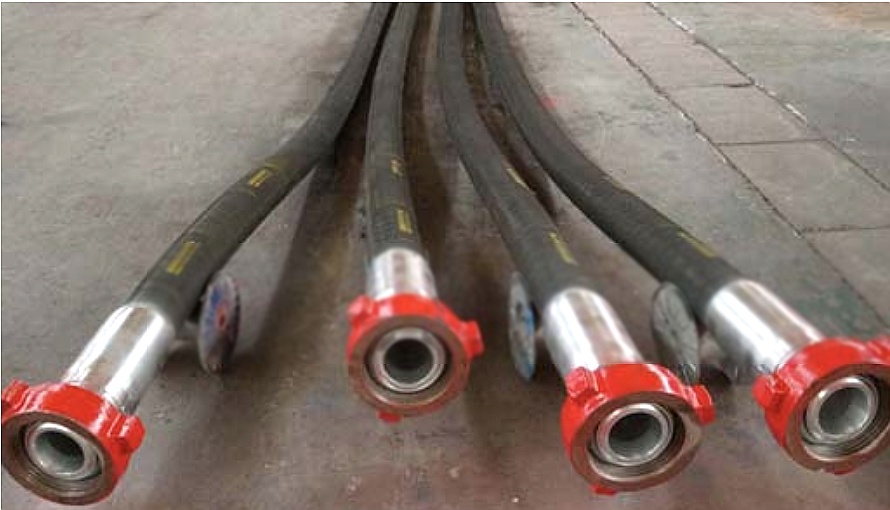
DEENPU API 7K Drilling Rotary Hose with Hammer Union End Fittings
The Drilling Rotary Hose is a critical high-pressure flexible hose used to connect the top of the drilling standpipe to the vertical swivel joint in drilling rigs. It provides the flexible conduit for drilling mud circulation during drilling, well cementing, workover, and downhole servicing operations. Manufactured to strict API 7K specification, DEENPU drilling hoses are rated for working pressures from 1,500 PSI (11 MPa) to 10,000 PSI (70 MPa) with inner diameters ranging from 2″ to 6″.
Each hose is constructed with a three-layer composite structure: an inner rubber tube resistant to oil and abrasion, a steel wire reinforced intermediate layer for high pressure containment, and a weather-resistant outer rubber cover. All hoses are supplied with API standard end fittings including TBG (threaded connection), LP (line pipe), and hammer unions for quick and reliable installation.
DEENPU drilling hoses are engineered to handle drilling mud, water-based mud, oil-based mud, and completion fluids with aniline points as low as 60°C. The hoses are also used to adjust installation alignment between the drilling pipeline and standpipe, absorbing vibration and eliminating stress from relative movement between fixed and rotating components.
Hose Construction & Cross-Section
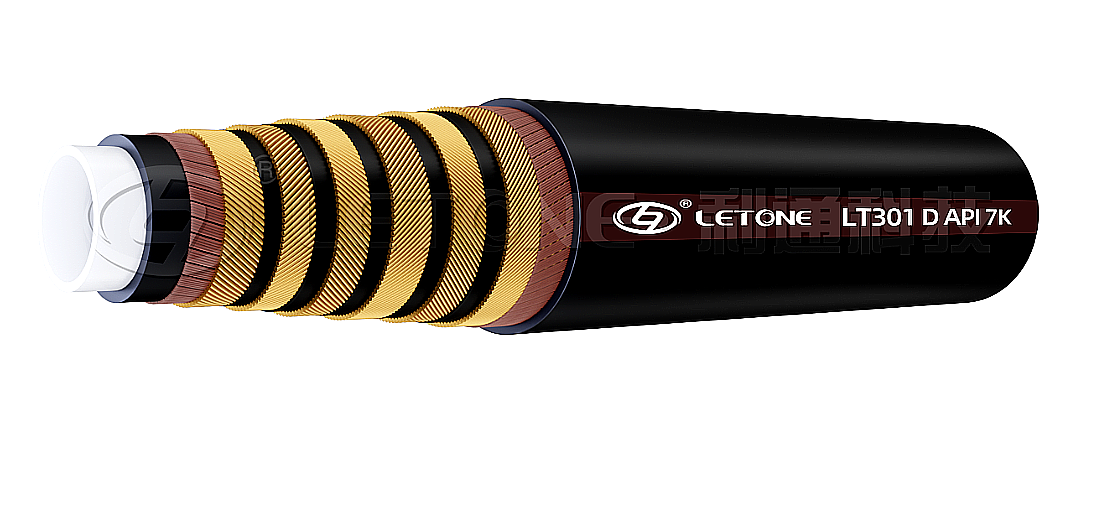
DEENPU API 7K Drilling Hose Cross-Section — Multi-Layer Reinforced Construction
The drilling hose is composed of three precision-engineered layers that work together to withstand extreme pressure and harsh drilling environments:
Inner Rubber TubeOil-resistant, abrasion-resistant synthetic rubber compound. Designed to withstand oil-based and water-based drilling fluids at high pressure. Minimum aniline point: 60°C.
Reinforcement LayerMulti-layer high-tensile steel wire braiding or spiral winding. Provides structural strength and pressure containment for up to 10,000 PSI working pressure. Reinforcement count varies with pressure rating and hose diameter.
Outer Rubber CoverWeather-resistant, ozone-resistant synthetic rubber cover. Protects the reinforcement layer from external abrasion, UV exposure, and environmental damage. Available in standard black or custom colors.
How the Drilling Hose Works
The drilling rotary hose serves as the flexible high-pressure conduit in the mud circulation system, connecting the stationary standpipe to the rotating swivel:
- Flexible Pressure Conduit — The drilling hose bridges the gap between the fixed drilling standpipe on the rig floor and the vertically moving swivel joint at the top of the derrick. Its flexibility allows the swivel to move up and down as the drill string is raised or lowered, while maintaining continuous high-pressure mud circulation.
- Vibration & Alignment Absorption — The reinforced rubber construction absorbs vibration and accommodates minor installation misalignment between the drilling pipeline and the standpipe. This prevents stress concentration and fatigue on rigid connections, extending the service life of the entire circulation system.
- High-Pressure Fluid Transfer — Drilling mud, cement slurry, and completion fluids are pumped at high pressure through the hose from the mud pumps to the swivel and down the drill string. The multi-layer steel wire reinforcement ensures the hose maintains structural integrity under sustained pressure pulses and dynamic loading conditions.
The drilling hose must also handle the lowest aniline point of 60°C for downhole operation media such as water, oil, and synthetic-based fluids, making material selection and quality control critical for safe and reliable performance.
Key Features
Applications
- Oil & gas well drilling — High-pressure flexible connection between standpipe and swivel for drilling mud circulation on land and offshore rigs
- Well cementing operations — Transfer of cement slurry from cementing pumps to wellhead during casing cementing jobs
- Workover and well servicing — Flexible hose for workover rigs, snubbing units, and coiled tubing operations
- Downhole servicing operations — Pressure testing, acidizing, fracturing, and other stimulation services
- Mud pump discharge lines — Connecting mud pump discharge manifold to the standpipe on large drilling rigs
- Vibrator hoses — Specialized vibratory hose connections for mud pump pulsation dampening and vibration isolation
- High-pressure fluid transfer — Transfer of high-pressure oil and water-based mud with aniline point above 60°C
Technical Specifications — Rotary Hose
| ID mm (in) | O.D. mm | Grade | Working Pressure MPa (PSI) |
Test Pressure MPa (PSI) |
Min. Bending Radius mm |
Max. Length m |
End Fittings |
|---|---|---|---|---|---|---|---|
| 51 (2″) | 68.6 | A | 11 (1,500) | 21 (3,000) | 800 | 30 | TBG, LP, Union |
| 69.0 | B | 14 (2,000) | 28 (4,000) | 800 | |||
| 74.4 | C | 28 (4,000) | 56 (8,000) | 850 | |||
| 63.5 (2-1/2″) | 81.9 | A | 11 (1,500) | 21 (3,000) | 900 | 30 | |
| 82.3 | B | 14 (2,000) | 28 (4,000) | 900 | |||
| 87.7 | C | 28 (4,000) | 56 (8,000) | 1,000 | |||
| 76 (3″) | 95.2 | A | 11 (1,500) | 21 (3,000) | 950 | 30 | |
| 100.1 | B | 14 (2,000) | 28 (4,000) | 950 | |||
| 108.8 | C | 28 (4,000) | 56 (8,000) | 1,050 | |||
| 89 (3-1/2″) | 117.3 | A | 11 (1,500) | 21 (3,000) | 1,000 | 30 | |
| 119.5 | B | 14 (2,000) | 28 (4,000) | 1,000 | TBG, LP, Union | ||
| 122.8 | C | 28 (4,000) | 56 (8,000) | 1,100 | |||
| 102 (4″) | 128.4 | A | 11 (1,500) | 21 (3,000) | 1,050 | 30 | |
| 138.8 | B | 14 (2,000) | 28 (4,000) | 1,050 | TBG, LP, Union | ||
| 147.4 | C | 28 (4,000) | 56 (8,000) | 1,100 | |||
| 127 (5″) | 150.0 | A | 11 (1,500) | 21 (3,000) | 1,200 | 30 | |
| 154.1 | B | 14 (2,000) | 28 (4,000) | 1,200 | TBG, LP, Union | ||
| 163.0 | C | 28 (4,000) | 56 (8,000) | 1,300 | |||
| 152 (6″) | 180.0 | A | 11 (1,500) | 21 (3,000) | 1,400 | 30 | |
| 185.0 | B | 14 (2,000) | 28 (4,000) | 1,400 | TBG, LP, Union | ||
| 196.0 | C | 28 (4,000) | 56 (8,000) | 1,400 |
Grade A: 11 MPa (1,500 PSI) | Grade B: 14 MPa (2,000 PSI) | Grade C: 28 MPa (4,000 PSI). Contact us for higher pressure grades D, E, F (35, 52, 70 MPa) and custom lengths.
High Pressure Grades — D, E, F
| ID mm (in) | O.D. mm | Grade | Working Pressure MPa (PSI) |
Test Pressure MPa (PSI) |
Min. Bending Radius mm |
|---|---|---|---|---|---|
| 51 (2″) | 75.0 | D | 35 (5,000) | 70 (10,000) | 850 |
| 80.6 | E | 52 (7,500) | 105 (15,000) | 900 | |
| 83.2 | F | 70 (10,000) | 140 (20,000) | 950 | |
| 63.5 (2-1/2″) | 107.0 | D | 35 (5,000) | 70 (10,000) | 1,000 |
| 110.0 | E | 52 (7,500) | 105 (15,000) | 1,050 | |
| 114.0 | F | 70 (10,000) | 140 (20,000) | 1,100 | |
| 76 (3″) | 120.0 | D | 35 (5,000) | 70 (10,000) | 1,150 |
| 124.0 | E | 52 (7,500) | 105 (15,000) | 1,100 | |
| 135.0 | F | 70 (10,000) | 140 (20,000) | 1,150 | |
| 89 (3-1/2″) | 133.0 | D | 35 (5,000) | 70 (10,000) | 1,100 |
| 146.5 | E | 52 (7,500) | 105 (15,000) | 1,150 | |
| 153.0 | F | 70 (10,000) | 140 (20,000) | 1,200 | |
| 102 (4″) | 148.0 | D | 35 (5,000) | 70 (10,000) | 1,100 |
| 156.3 | E | 52 (7,500) | 105 (15,000) | 1,150 | |
| 165.0 | F | 70 (10,000) | 140 (20,000) | 1,200 |
Grade D: 35 MPa (5,000 PSI) | Grade E: 52 MPa (7,500 PSI) | Grade F: 70 MPa (10,000 PSI). Max standard length: 30 meters per hose. Custom lengths available on request.
When Ordering, Please Specify
- Hose TypeRotary hose or vibratory hose. Specify whether the hose is for drilling mud circulation (rotary) or mud pump vibration dampening (vibratory).
- Inner DiameterRequired ID: 2″ (51 mm), 2-1/2″ (63.5 mm), 3″ (76 mm), 3-1/2″ (89 mm), 4″ (102 mm), 5″ (127 mm), or 6″ (152 mm).
- Pressure GradeSelect grade: A (1,500 PSI), B (2,000 PSI), C (4,000 PSI), D (5,000 PSI), E (7,500 PSI), or F (10,000 PSI) based on maximum operating pressure.
- End FittingsTBG (threaded), LP (line pipe), or hammer union connections. Specify connection type, size, and thread standard for each end.
- Length RequiredStandard maximum length per hose: 30 meters (100 feet). Specify total length required and whether one continuous piece or multiple hoses with intermediate fittings.
- Fluid CompatibilityType of drilling fluid: water-based mud, oil-based mud, or synthetic-based mud. Specify minimum aniline point requirement.
- Temperature RangeMinimum and maximum operating temperature of the drilling fluid and ambient environment.
- Certification RequirementsAPI 7K certification, material test certificates (MTC), hydrostatic test certificates, and third-party inspection (DNV, BV, SGS).
- Quantity & DeliveryTotal quantity, delivery schedule, and shipping destination. Specify if spare packing kits or protective covers are required.
Custom Manufacturing & OEM Capability
- Custom Lengths — Hoses manufactured in continuous lengths exceeding 30 meters or in custom segments with intermediate fittings.
- Special End Fittings — Non-standard API connections, custom-threaded fittings, or customer-specified coupling types manufactured to drawing.
- Pressure Grade Customization — Intermediate pressure ratings between standard grades or reinforced designs for specific operating conditions.
- Fluid Compatibility — Custom inner tube compounds for aggressive fluids, H2S environments, high-temperature applications, or extended aniline point requirements.
- Color & Branding — Custom outer cover colors, customer branding, embossed markings, and identification labeling.
- Armor & Protection — External armor coils, protective sleeves, abrasion guards, or fire-resistant covers for extreme environments.
- Complete Hose Assembly — Pre-assembled hose assemblies with swaged or crimped end fittings, pressure tested, and delivered ready for installation.
Quality Control & Testing Standards
- Each hose hydrostatically tested to 1.5x working pressure at factory with test certificates provided.
- Inner tube compound oil and chemical resistance tested to API 7K specification for aniline point compatibility.
- Steel wire reinforcement tensile strength and elongation verified on incoming material with MTC from wire supplier.
- Outer cover ozone and UV aging tested per ASTM D1149 and ASTM D4329 standards.
- End fittings pressure and torque tested with the hose assembly to ensure leak-free connection integrity.
- Complete hose assembly burst tested to API 7K minimum burst pressure requirements.
- Material test certificates (MTC) per EN 10204 3.1 provided for all pressure-bearing materials.
- Third-party inspection and certification by DNV, BV, SGS, or ABS available upon request.
Frequently Asked Questions
What is the difference between a rotary hose and a vibratory hose?
A rotary hose is the main high-pressure flexible connection between the drilling standpipe and the swivel, designed for continuous pressure and flexibility during drilling operations. A vibratory hose is typically a shorter, more flexible hose installed between the mud pump discharge manifold and the standpipe, primarily used to absorb pump pulsation and vibration, protecting the standpipe and downstream connections from fatigue damage. Both are manufactured to API 7K but may differ in reinforcement count, flexibility, and end fitting configuration.
How do I select the correct pressure grade for my drilling hose?
Select the pressure grade based on the maximum operating pressure of your mud pump system, including pressure spikes. The working pressure of the hose must exceed the maximum pump pressure by a safety margin. General guidelines: Grade A (1,500 PSI) for low-pressure workover rigs; Grade B/C (2,000–4,000 PSI) for standard land drilling; Grade D (5,000 PSI) for medium-pressure offshore or HPHT drilling; Grade E/F (7,500–10,000 PSI) for high-pressure deep drilling or cementing operations. Always consult your drilling engineer and verify against pump specifications.
What is the minimum bending radius and why does it matter?
The minimum bending radius is the smallest radius the hose can be bent without causing damage to the reinforcement layer or compromising pressure integrity. Bending the hose tighter than the specified minimum radius can cause steel wire fatigue, kinking, and premature failure. For DEENPU rotary hoses, the minimum bending radius ranges from 800 mm (for 2″ Grade A) to 1,400 mm (for 6″ Grade C). Always ensure the hose routing provides adequate bend radius, and avoid sharp bends near end fittings where stress concentration is highest.
How long does a drilling hose last and what is the replacement interval?
Drilling hose service life depends on operating pressure, fluid type, temperature, bending frequency, and environmental conditions. Under normal drilling conditions with proper handling, a rotary hose typically lasts 6–18 months of continuous service. API 7K recommends periodic inspection of the outer cover for cracks, cuts, and abrasion; checking for leaks at end fittings; and monitoring for bulging or deformation of the reinforcement layer. Replace the hose immediately if any of the following are observed: cover damage exposing wire reinforcement, end fitting leakage, visible bulging, kinking, or soft spots indicating internal delamination. DEENPU recommends a preventive replacement schedule based on operating hours and pressure cycles.
What end fittings are available and how do I choose?
DEENPU drilling hoses are available with three standard end fitting types: TBG (Threaded Box & Pin) — standard API threaded connections for direct connection to standpipe and swivel; LP (Line Pipe) — line pipe threaded connections for piping system integration; Hammer Union — quick-connect/disconnect hammer unions for fast rig-up and rig-down, commonly used in workover and service operations. Select the fitting type that matches your existing standpipe and swivel connections. Custom thread standards (NPT, BSP, metric) and special fittings are available on request.
Can you manufacture complete hose assemblies with fittings pre-installed?
Yes, DEENPU provides complete pre-assembled hose assemblies with end fittings swaged or crimped onto the hose at the factory. Each assembly is hydrostatically tested to 1.5x working pressure and delivered with a test certificate. Pre-assembled assemblies eliminate the need for field swaging, reduce installation time, and ensure proper fitting installation. Specify the fitting type, thread standard, and connection orientation (same-end or opposite-end) when ordering. We can also provide intermediate fittings, manifold assemblies, and custom hose rack configurations.
Request a Quote — Drilling Rotary Hose
Send your hose specifications and we will recommend the optimal API 7K grade and size with a complete proposal including pricing, delivery schedule, and test certificates within 48 hours.
- EMAILSALES@DEENPU-MACHINERY.COM
- WHATSAPP+86-15806284962
- RESPONSEQuotation within 48 hours
Include: Hose type, ID size, pressure grade, end fitting type, required length, drilling fluid type, and quantity.
About Us
 Our company has been in the oil & gas drilling equipment industry for over more years, We are here to serve all your drilling equipment needs.