
Cementing Hose — API 7K Standard, High Pressure Cement Slurry Transfer
CH Series • 2″–6″ ID • 1,500–15,000 PSI Working Pressure • API 7K Certified • H2S Resistant
Product Overview
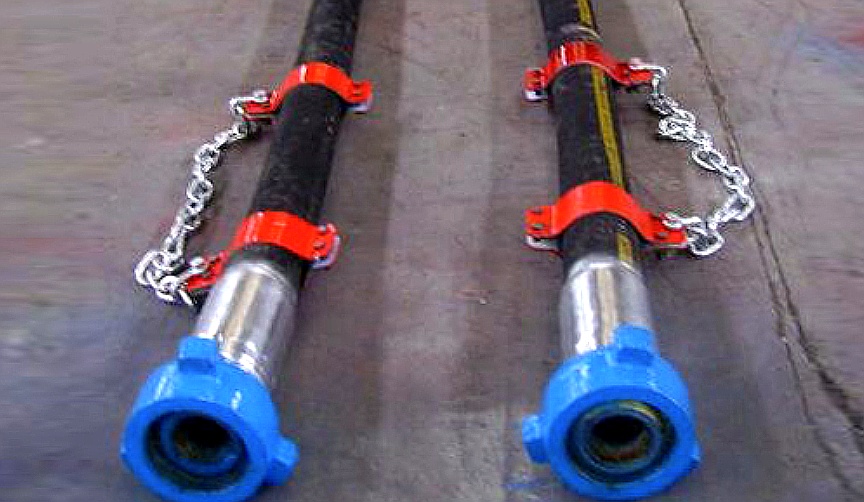
DEENPU CH Series API 7K Cementing Hose with Hammer Union End Fittings and Safety Clamps
The Cementing Hose is a high-pressure flexible hose designed for the conveyance of cement slurries between the cementing pump manifold and the cementing head during well cementing operations. It is also widely used as a rotary hose for flexible connection between the drilling standpipe and the vertically movable swivel in drilling and mud delivery systems. Manufactured to strict API 7K specification, DEENPU CH Series cementing hoses are engineered for the most demanding oilfield applications, delivering water-based or oil-based mud, cement slurries, and other high-pressure media under extreme conditions.
DEENPU CH Series cementing hoses are available in inner diameters from 2″ (51 mm) to 6″ (152 mm) with pressure grades from A (1,500 PSI) to G (15,000 PSI). The hose features a unique five-layer composite construction combining stainless steel armor inner tubes, carbon fiber reinforced layers, steel wire reinforcement, and a carbon fiber outer protective layer. This advanced construction ensures exceptional pressure resistance, flexibility, and durability while maintaining a corrosion-resistant inner surface capable of handling hydrogen sulfide (H2S) bearing fluids.
All DEENPU cementing hoses are supplied with a variety of API standard end fittings including hammer unions, threaded connections (TBG), line pipe (LP) connections, and flanges. The product is available in two structural types: steel wire reinforcing type and steel link line reinforcing type, allowing customers to select the optimal reinforcement for their specific application requirements.
Hose Construction & Cross-Section
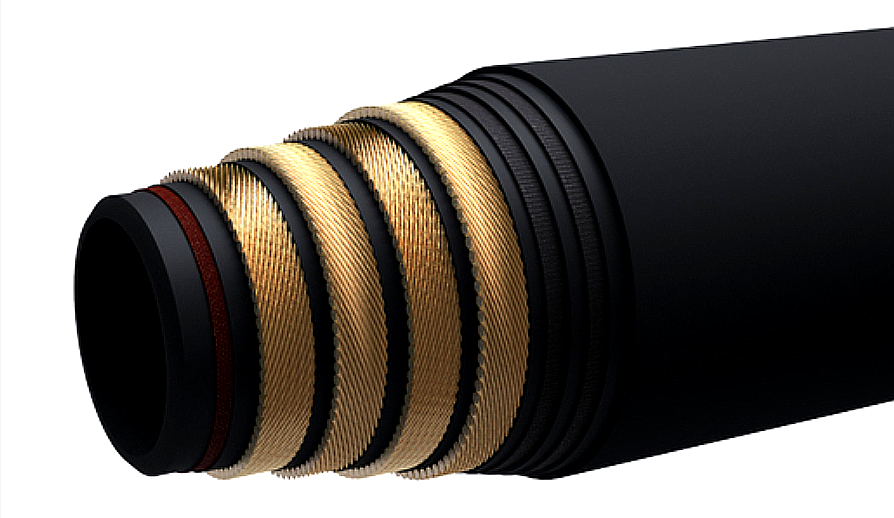
DEENPU CH Series Cementing Hose Cross-Section — Five-Layer Composite Construction
DEENPU CH Series cementing hoses employ a proprietary five-layer composite structure designed to maximize pressure resistance, flexibility, and service life under extreme oilfield conditions:
Inner Armor TubeStainless steel or corrosion-resistant inner sub-layer. Provides smooth bore for fluid flow and resists chemical attack from cement slurries, H2S, and other corrosive media.
Carbon Fiber Reinforce SubHigh-modulus carbon fiber reinforcement layer providing radial strength and pressure containment. Carbon fiber offers superior stiffness-to-weight ratio and fatigue resistance.
Middle Sub LayerBonding and structural transition layer between the carbon fiber reinforcement and steel wire reinforcement. Ensures load transfer and structural integrity across layers.
Steel Wire Reinforce SubHigh-tensile steel wire braiding or spiral winding providing primary pressure containment and axial strength. Multi-layer steel wire construction ensures burst resistance under peak pressure conditions.
Carbon Fiber Outer SubCarbon fiber outer protective layer providing abrasion resistance, UV protection, and impact resistance. Protects the steel wire reinforcement from external damage and environmental degradation.
How the Cementing Hose Works
The cementing hose performs three critical functions in oilfield cementing and drilling operations:
- High-Pressure Slurry Transfer — During well cementing operations, cement slurry is pumped at high pressure from the cementing pump manifold through the cementing hose to the cementing head at the wellhead. The hose must withstand sustained pressures up to 15,000 PSI while maintaining structural integrity under the abrasive and chemically aggressive nature of cement slurries. The stainless steel armor inner tube provides a smooth, corrosion-resistant surface that prevents slurry buildup and ensures consistent flow.
- Flexible Connection & Vibration Isolation — The cementing hose serves as the flexible connection between the cementing pump and the cementing head (or between the drilling pump line and the riser), accommodating installation misalignment and isolating vibration from the pump system. The multi-layer composite construction provides both the flexibility needed for routing around rig structures and the stiffness needed to resist pressure-induced expansion. This dual function prevents stress on rigid piping connections and reduces fatigue-related failures.
- Corrosion-Resistant Media Delivery — In addition to cement slurries, the hose is used to deliver water, oil, drilling mud, and other high-pressure media in borehole operations. The H2S-resistant inner armor tube allows safe handling of sour gas environments, while the carbon fiber and steel wire reinforcement provides the structural strength needed for deep well operations. The hose can deliver both water-based and oil-based fluids at high flow rates, making it a versatile component in drilling and completion operations.
Key Features
Applications
- Well cementing operations — High-pressure transfer of cement slurries from cementing pump manifold to cementing head at the wellhead
- Drilling mud circulation — Flexible connection between drilling pump line and standpipe for water-based and oil-based mud delivery
- Workover and completion — Cement slurry, completion fluid, and stimulation fluid delivery during well servicing operations
- Sour gas drilling (H2S) — Corrosion-resistant inner armor allows safe handling of hydrogen sulfide bearing fluids in sour gas environments
- Deep well cementing — Grade D, E, F, and G (5,000–15,000 PSI) hoses for deep and ultra-deep well cementing programs
- Offshore cementing — Carbon fiber outer protection resists salt spray and UV exposure for offshore platform operations
- Vibration isolation — Flexible connection between pump and rigid piping to absorb vibration and prevent fatigue failure
- Installation error adjustment — Flexible routing between pump line and riser to accommodate installation misalignment and thermal expansion
Technical Specifications — 2″ and 2-1/2″ ID
| ID mm (in) | Grade | Working Pressure MPa (PSI) |
Test Pressure MPa (PSI) |
Min. Bending Radius mm |
Connector Code |
|---|---|---|---|---|---|
| 51 (2″) | A | 11 (1,500) | 22 (3,000) | 800 | TBG, LP, Union |
| B | 14 (2,000) | 28 (4,000) | 800 | ||
| C | 28 (4,000) | 56 (8,000) | 850 | ||
| D | 35 (5,000) | 70 (10,000) | 850 | ||
| E | 52 (7,500) | 104 (15,000) | 900 | ||
| F | 70 (10,000) | 140 (20,000) | 950 | ||
| G | 105 (15,000) | 157.5 (22,500) | 1,000 | ||
| 64 (2-1/2″) | A | 11 (1,500) | 22 (3,000) | 900 | TBG, LP, Union |
| B | 14 (2,000) | 28 (4,000) | 900 | ||
| C | 28 (4,000) | 56 (8,000) | 1,000 | ||
| D | 35 (5,000) | 70 (10,000) | 1,000 | ||
| E | 52 (7,500) | 104 (15,000) | 1,050 | ||
| F | 70 (10,000) | 140 (20,000) | 1,100 | ||
| G | 105 (15,000) | 157.5 (22,500) | 1,150 |
Technical Specifications — 3″ and 3-1/2″ ID
| ID mm (in) | Grade | Working Pressure MPa (PSI) |
Test Pressure MPa (PSI) |
Min. Bending Radius mm |
Connector Code |
|---|---|---|---|---|---|
| 76 (3″) | A | 11 (1,500) | 22 (3,000) | 950 | TBG, LP, Union |
| B | 14 (2,000) | 28 (4,000) | 950 | ||
| C | 28 (4,000) | 56 (8,000) | 1,050 | ||
| D | 35 (5,000) | 70 (10,000) | 1,100 | ||
| E | 52 (7,500) | 104 (15,000) | 1,150 | ||
| F | 70 (10,000) | 140 (20,000) | 1,150 | ||
| G | 105 (15,000) | 157.5 (22,500) | 1,200 | ||
| 89 (3-1/2″) | A | 11 (1,500) | 22 (3,000) | 1,000 | TBG, LP, Union |
| B | 14 (2,000) | 28 (4,000) | 1,000 | ||
| C | 28 (4,000) | 56 (8,000) | 1,100 | ||
| D | 35 (5,000) | 70 (10,000) | 1,100 | ||
| E | 52 (7,500) | 104 (15,000) | 1,150 | ||
| F | 70 (10,000) | 140 (20,000) | 1,150 | ||
| G | 105 (15,000) | 157.5 (22,500) | 1,200 |
Technical Specifications — 4″, 5″, and 6″ ID
| ID mm (in) | Grade | Working Pressure MPa (PSI) |
Test Pressure MPa (PSI) |
Min. Bending Radius mm |
Connector Code |
|---|---|---|---|---|---|
| 102 (4″) | A | 11 (1,500) | 22 (3,000) | 1,050 | TBG, LP, Union |
| B | 14 (2,000) | 28 (4,000) | 1,050 | ||
| C | 28 (4,000) | 56 (8,000) | 1,100 | ||
| D | 35 (5,000) | 70 (10,000) | 1,100 | ||
| E | 52 (7,500) | 104 (15,000) | 1,150 | ||
| F | 70 (10,000) | 140 (20,000) | 1,200 | ||
| 127 (5″) | A | 11 (1,500) | 22 (3,000) | 1,200 | LP, Union |
| B | 14 (2,000) | 28 (4,000) | 1,200 | ||
| C | 28 (4,000) | 56 (8,000) | 1,300 | ||
| D | 35 (5,000) | 70 (10,000) | 1,300 | ||
| 152 (6″) | A | 11 (1,500) | 22 (3,000) | 1,300 | LP, Union |
| B | 14 (2,000) | 28 (4,000) | 1,300 | ||
| C | 28 (4,000) | 56 (8,000) | 1,400 | ||
| D | 35 (5,000) | 70 (10,000) | 1,400 |
Grade A: 11 MPa (1,500 PSI) | Grade B: 14 MPa (2,000 PSI) | Grade C: 28 MPa (4,000 PSI) | Grade D: 35 MPa (5,000 PSI) | Grade E: 52 MPa (7,500 PSI) | Grade F: 70 MPa (10,000 PSI) | Grade G: 105 MPa (15,000 PSI). Test pressure: 2x working pressure for grades A-F; 1.5x for Grade G. Custom lengths and configurations available on request.
When Ordering, Please Specify
- Hose TypeCementing hose for slurry transfer or rotary hose for drilling mud circulation. Specify primary application.
- Inner DiameterRequired ID: 2″ (51 mm), 2-1/2″ (64 mm), 3″ (76 mm), 3-1/2″ (89 mm), 4″ (102 mm), 5″ (127 mm), or 6″ (152 mm).
- Pressure GradeSelect grade: A (1,500 PSI), B (2,000 PSI), C (4,000 PSI), D (5,000 PSI), E (7,500 PSI), F (10,000 PSI), or G (15,000 PSI) based on maximum pump operating pressure.
- Reinforcement TypeSteel wire reinforcing type or steel link line reinforcing type. Steel wire type offers higher pressure capacity; steel link line type offers enhanced flexibility.
- End FittingsTBG (threaded), LP (line pipe), hammer union, or flange connections. Specify connection type, size, and thread standard for each end.
- Length RequiredStandard maximum length per hose: 30 meters (100 feet). Specify total length and whether one continuous piece or multiple hoses with intermediate fittings.
- Fluid CompatibilityType of fluid: cement slurry, water-based mud, oil-based mud, or completion fluid. Specify if H2S bearing fluid (requires stainless steel armor inner tube).
- Temperature RangeMinimum and maximum operating temperature of the fluid and ambient environment.
- Certification RequirementsAPI 7K certification, material test certificates (MTC), hydrostatic test certificates, and third-party inspection (DNV, BV, SGS).
- Quantity & DeliveryTotal quantity, delivery schedule, and shipping destination. Specify if spare fittings or protective covers are required.
Custom Manufacturing & OEM Capability
- Custom Lengths — Hoses manufactured in continuous lengths exceeding 30 meters or in custom segments with intermediate fittings and manifolds.
- Special End Fittings — Non-standard API connections, custom-threaded fittings, weld-on flanges, or customer-specified coupling types manufactured to drawing.
- Pressure Grade Customization — Intermediate pressure ratings between standard grades or reinforced designs for specific operating conditions.
- Fluid Compatibility — Custom inner tube compounds for aggressive cement additives, high-temperature applications, or extended chemical resistance requirements.
- Color & Branding — Custom outer cover colors, customer branding, embossed markings, and identification labeling with traceability codes.
- Armor & Protection — External armor coils, protective sleeves, abrasion guards, fire-resistant covers, or anti-crush guards for extreme environments.
- Complete Hose Assembly — Pre-assembled hose assemblies with swaged or crimped end fittings, pressure tested, and delivered ready for installation with test certificates.
Quality Control & Testing Standards
- Each hose assembly hydrostatically tested to 2x working pressure (grades A-F) or 1.5x working pressure (Grade G) with test certificates provided.
- Inner tube compound chemical resistance tested to API 7K specification for cement slurry and H2S compatibility.
- Steel wire reinforcement tensile strength and elongation verified on incoming material with MTC from wire supplier.
- Carbon fiber reinforcement modulus and strength tested per ASTM D3039 standard.
- Outer cover ozone and UV aging tested per ASTM D1149 and ASTM D4329 standards.
- End fittings pressure and torque tested with the hose assembly to ensure leak-free connection integrity under rated pressure.
- Complete hose assembly burst tested to API 7K minimum burst pressure requirements with safety factor verification.
- Material test certificates (MTC) per EN 10204 3.1 provided for all pressure-bearing and structural materials.
- Third-party inspection and certification by DNV, BV, SGS, or ABS available upon request.
Frequently Asked Questions
What is the difference between a cementing hose and a rotary drilling hose?
A cementing hose is specifically designed for the high-pressure transfer of cement slurries between the cementing pump manifold and the cementing head during well cementing operations. It typically features a stainless steel or corrosion-resistant inner armor tube to handle the abrasive and chemically aggressive nature of cement slurries. A rotary drilling hose is used for flexible connection between the drilling standpipe and the swivel for drilling mud circulation. DEENPU CH Series cementing hoses are designed to serve both functions, meeting API 7K requirements for both cementing and rotary applications. The key difference is the inner tube material: cementing hoses use stainless steel armor for cement slurry resistance, while standard rotary hoses use rubber inner tubes optimized for mud circulation.
What is the difference between steel wire reinforcing and steel link line reinforcing?
Steel wire reinforcing uses high-tensile steel wire braiding or spiral winding to provide structural strength and pressure containment. This type offers higher pressure capacity and is suitable for high-pressure cementing operations (grades D, E, F, G). Steel link line reinforcing uses interlocking steel chain or link structures to provide reinforcement. This type offers enhanced flexibility and kink resistance, making it suitable for applications requiring tight bends or frequent flexing. The choice depends on your pressure requirements and routing constraints: use steel wire for maximum pressure and steel link line for maximum flexibility.
How do I select the correct pressure grade for my cementing operation?
Select the pressure grade based on the maximum operating pressure of your cementing pump system, including pressure spikes during pumping. General guidelines: Grade A/B (1,500–2,000 PSI) for shallow well cementing and low-pressure workover; Grade C/D (4,000–5,000 PSI) for standard land well cementing; Grade E/F (7,500–10,000 PSI) for deep well cementing and high-pressure squeeze jobs; Grade G (15,000 PSI) for ultra-deep well cementing, high-pressure formation fracturing, and HPHT applications. Always apply a safety factor: the hose working pressure should exceed the maximum pump pressure by at least 25%.
What is the minimum bending radius and why does it matter?
The minimum bending radius is the smallest radius the hose can be bent without damaging the reinforcement layers or compromising pressure integrity. For DEENPU CH Series cementing hoses, the minimum bending radius ranges from 800 mm (for 2″ Grade A) to 1,400 mm (for 6″ Grade D). Bending the hose tighter than the specified minimum radius can cause carbon fiber and steel wire fatigue, kinking, and premature failure. Always ensure the hose routing on the rig floor provides adequate bend radius, and use support clamps at bends to maintain the minimum radius. The minimum bending radius increases with hose diameter and pressure grade.
How does the H2S resistance feature work?
Hydrogen sulfide (H2S) is a highly corrosive gas found in sour gas wells and some drilling environments. Standard rubber inner tubes can be rapidly degraded by H2S, leading to hose failure and safety hazards. DEENPU CH Series cementing hoses feature a stainless steel armor inner tube or specially formulated H2S-resistant rubber compound that resists chemical attack from hydrogen sulfide and other aggressive media. This allows the hose to be safely used in sour gas drilling, H2S-bearing cementing operations, and other corrosive environments. For H2S applications, always specify the stainless steel armor inner tube option and confirm material compatibility with your specific H2S concentration.
Can you manufacture complete cementing hose assemblies with pre-installed fittings?
Yes, DEENPU provides complete pre-assembled cementing hose assemblies with end fittings swaged or crimped onto the hose at the factory. Each assembly is hydrostatically tested to the specified test pressure and delivered with a test certificate. Pre-assembled assemblies eliminate the need for field swaging, reduce installation time, and ensure proper fitting installation. Specify the fitting type, thread standard, connection orientation (same-end or opposite-end), and any intermediate fittings when ordering. We can also provide manifold assemblies, hose racks, and custom routing configurations for complete cementing system integration.
Request a Quote — Cementing Hose
Send your cementing hose specifications and we will recommend the optimal CH Series model and grade with a complete proposal including pricing, delivery schedule, and test certificates within 48 hours.
- EMAILSALES@DEENPU-MACHINERY.COM
- WHATSAPP+86-15806284962
- RESPONSEQuotation within 48 hours
Include: Hose type, ID size, pressure grade, reinforcement type, end fitting type, required length, fluid type, and quantity.
About Us
 Our company has been in the oil & gas drilling equipment industry for over more years, We are here to serve all your drilling equipment needs.