
Gear Operated Plug Valve — API 6A, 1"–4", 1502/1002/DC15
5,000–15,000 PSIG Working Pressure • NACE & Non-NACE • Tapered Lubricated Seal • Rapid Gear Operated Open/Close
Product Overview
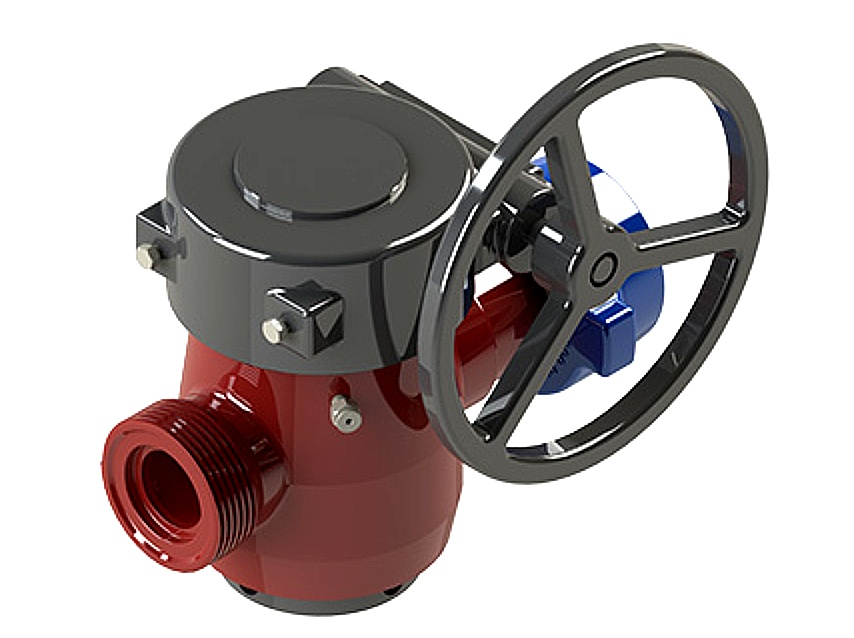
DEENPU Gear Operated Plug Valve — 1502 Union Connections with Gear Drive for Rapid Operation
DEENPU Gear Operated Plug Valve is a high-performance, compact, and reliable valve designed for hydraulic fracturing, flowback, well stimulation, and well service operations. Manufactured to API 6A and API 16C standards, it is available in sizes 1″ to 4″ with 1502, 1002, and DC15 hammer union connections at working pressures up to 15,000 PSIG. Available in both NACE (sour service) and non-NACE configurations.
Featuring a lubricated, tapered seal design with uniform seating of sealing inserts, the valve provides a bubble-tight seal across the full pressure range. The gear-operated handwheel drive provides rapid open/close operation, reducing input torque by 60-80%, making it ideal for high-cycle frac and flowback applications.
How It Works
- Flow Isolation — A tapered plug rotates 90 degrees within the valve body. When open, the plug bore aligns with inlet/outlet for full-bore flow. When closed, the plug wedges between upper and lower seats for pressure-tight sealing. Lubricated sealant reduces friction and enhances sealing.
- Gear Operation — The worm gear provides 20:1-40:1 mechanical advantage, reducing handwheel torque by 60-80%. Self-locking prevents position drift. Visual indicator shows open/close status.
- Pressure-Assisted Seal — Line pressure pushes the plug deeper into the tapered cavity when closed, increasing sealing force with pressure. Sealant injection through grease fittings provides secondary sealing and corrosion protection.
Key Features
Applications
- Hydraulic fracturing — High-pressure isolation on frac manifold and treating iron
- Flowback operations — Flow control on flowback manifold and choke manifold
- Well stimulation & acidizing — Flow control on stimulation and acid injection lines
- Cementing — Isolation on cement pump discharge lines and cement manifold
- BOP systems — Isolation on BOP control, choke, and kill lines
- Gravel pack / snubbing / coiled tubing — Flow control on slurry and injector lines
- Production testing — Flow control on test manifold, separator, and flare lines
- Sand separator systems — Isolation on sand separator inlet/outlet/bypass lines
Dimensions, Weight & Flow Rate
| Size x Connection | A (in/mm) | B (in/mm) | C (in/mm) | Weight (lbs/kg) | Max Flow (BBL/M) |
|---|---|---|---|---|---|
| 3″ x 3″ 1502 F x M | 17.69 / 449 | 7.19 / 183 | 5.79 / 147 | 243 / 110 | 18.5 |
| 4″ x 4″ 1002 F x M | 21.00 / 533 | 7.69 / 195 | 6.20 / 157 | 388 / 176 | 34.4 |
| 4″ x 4″ 1502 F x M | 21.00 / 533 | 7.69 / 195 | 6.20 / 157 | 413 / 187 | 30.0 |
| 3″ DC15 F x M | 18.50 / 470 | 7.19 / 183 | 5.79 / 147 | 253 / 115 | 18.5 |
A=Overall length, B=Width, C=Height to gear operator top. Contact us for 1″ and 2″ size dimensions.
Pressure & Temperature Ratings
| Working Pressure | 5,000 PSIG | 10,000 PSIG | 15,000 PSIG |
|---|---|---|---|
| Test Pressure | 7,500 PSIG | 15,000 PSIG | 22,500 PSIG |
| API Temp Rating | P-U (-20F to 250F) | P-U (-20F to 250F) | P-U (-20F to 250F) |
Material Specifications
| Service | Body / Bonnet / Connections | Working Pressure |
|---|---|---|
| Standard (Non-NACE) | Alloy steel (AISI 4130/4140), heat-treated | 15,000 PSIG |
| Sour Service (NACE) | NACE MR0175 / ISO 15156 compliant alloy | 10,000 PSIG |
NACE service requires controlled hardness (max 22 HRC) and chemical composition for H2S resistance. Contact us for trim and sealant material options.
When Ordering, Please Specify
- Valve Size1″, 2″, 3″, or 4″ nominal bore.
- Connection Type1502, 1002, or DC15 hammer union. Female x Male standard.
- Working Pressure5,000, 10,000, or 15,000 PSIG.
- Service ConditionNon-NACE (sweet) or NACE (sour / H2S).
- Material GradeAlloy steel or NACE-compliant materials.
- Trim & SealantStandard or hardened trim. Standard or special sealant.
- AccessoriesLocking device, position indicator, limit switch, chainwheel.
- CertificationAPI 6A/16C, MTC, hydrostatic test, NACE, third-party (DNV/BV/SGS).
Custom Manufacturing & OEM Capability
- Non-standard sizes and dimensions — Custom bore and face-to-face for specific skid configurations
- Special connections — Flanged ends (API 6B/6BX), threaded ends, or proprietary connections
- High-temperature service — Extended temperature range to 400F for steam stimulation
- Abrasion-resistant trim — Tungsten carbide or ceramic plug and seat inserts
- Actuator-ready — ISO 5210 mounting flange for pneumatic/hydraulic/electric actuation
- Remote monitoring — Position transmitter and limit switches for SCADA integration
- Special coatings — Custom paint, epoxy coating, RFID tagging for fleet management
- Complete manifold packages — Valve supplied with DSA, spools, and fittings
Quality Control & Testing Standards
- Material chemical composition and mechanical properties verified per batch
- Body, bonnet, and connection forging UT and MPI inspection per API 6A
- Shell hydrostatic test at 1.5x working pressure per API 6A
- Seat hydrostatic test at 1.1x working pressure (zero leakage)
- Gas seat test (optional) at 80% working pressure using nitrogen
- Gear operator functional test: torque, backdrive, position indicator
- Dimensional inspection per API 6A tolerances
- Plug and seat contact surface dye penetrant inspection
- Sealant injection system functional verification
- MTC per EN 10204 3.1 for all pressure-bearing components
- Third-party inspection by DNV, BV, SGS, or ABS available
Frequently Asked Questions
What is the difference between gear operated and manual plug valves?
A manual plug valve uses a direct handwheel requiring full torque from the operator. A gear operated plug valve uses a worm gear (20:1-40:1 ratio) that multiplies operator input, reducing required torque by 60-80%. The gear operator enables rapid operation by a single operator even at high pressure. It is self-locking (prevents drift) and provides a visual position indicator. For frac applications with frequent cycling, the gear operator is the preferred choice.
What is the advantage of a tapered plug seal design?
The tapered plug is wider at the top and narrower at the bottom, matching a tapered body cavity. When closed, the plug is pushed downward into the taper, wedging between upper and lower seats. Benefits include: pressure-assisted sealing (seal improves with line pressure), uniform seating (prevents localized wear), self-cleaning (wipes debris during closing), and effective sealant distribution across sealing surfaces.
How do I select the right size plug valve?
Select based on flow rate and treating line size. The valve bore should match the treating iron ID to minimize pressure drop. For frac operations: 3″ valves handle 15-20 BBL/M, 4″ valves handle 30-35 BBL/M. For lower flow rates or individual pump isolation, 1″ or 2″ valves may be appropriate. Always verify that the valve pressure rating exceeds the maximum anticipated treating pressure with an adequate safety margin.
What is the difference between 1502, 1002, and DC15 connections?
1502 is the standard high-pressure hammer union for frac treating iron (15,000 PSI max). 1002 is a larger-diameter hammer union for high-flow applications (10,000 PSI max). DC15 is a proprietary connection type used on some frac equipment for quick connection. Select the connection that matches your existing treating iron to ensure compatibility.
Can the plug valve be used in sour gas (H2S) service?
Yes, for sour service, select the NACE MR0175 compliant configuration. The body, bonnet, and connections use NACE-compliant alloy steel with controlled hardness (max 22 HRC). Trim and seals are upgraded to H2S-resistant materials (Inconel, stainless steel). The working pressure is limited to 10,000 PSIG for NACE configurations. Specify H2S partial pressure and temperature when ordering.
What certifications do your gear operated plug valves carry?
DEENPU plug valves are manufactured to API 6A and API 16C. Each valve includes: MTC (chemical/mechanical), heat treatment certificate, hydrostatic test certificate (shell 1.5x, seat 1.1x), dimensional inspection report, NDT reports (UT/MPI), functional test report. NACE MR0175 compliance certificate for sour service. Material traceability from raw material to final inspection. Third-party certification by DNV, BV, SGS, or ABS available.
Request a Quote — Gear Operated Plug Valve
Send your frac or flowback specifications and we will recommend the optimal plug valve configuration with pricing and delivery within 48 hours.
- EMAILSALES@DEENPU-MACHINERY.COM
- WHATSAPP+86-15806284962
- RESPONSEQuotation within 48 hours
Include: Valve size, connection type, working pressure, service condition (NACE/non-NACE), flow rate, and quantity.
About Us
 Our company has been in the oil & gas drilling equipment industry for over more years, We are here to serve all your drilling equipment needs.